
Overview
A kidney transplant is a surgery that involves inserting a healthy kidney from a living or deceased donor into a person whose kidneys no longer function correctly.
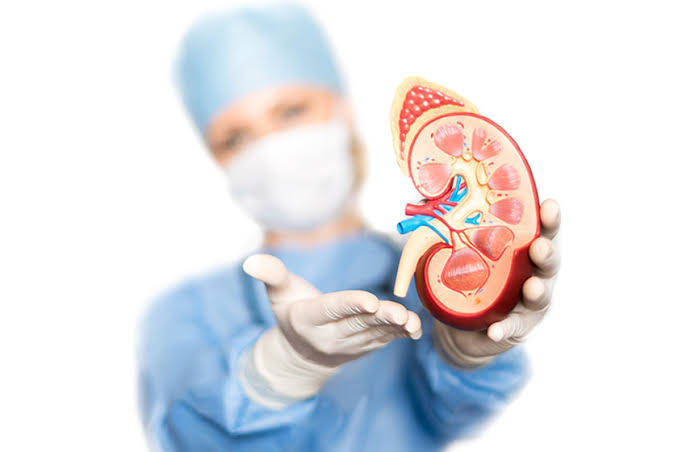
The kidneys are two bean-shaped organs located on either side of the spine, just below the rib cage. Each kidney is about the size of a fist. Their main job is to filter and remove waste, minerals, and fluid from the blood by producing urine.
When kidneys lose their ability to filter, harmful levels of fluid and waste build up in the body. This can increase blood pressure and lead to kidney failure, also called end-stage renal disease. End-stage renal disease occurs when the kidneys have lost about 90% of their ability to function properly.
Common causes of end-stage renal disease include:
- Diabetes
- Ongoing, uncontrolled high blood pressure
- Ongoing glomerulonephritis, which is an inflammation and eventual scarring of the small filters in the kidneys
- Lupus nephritis
- Polycystic kidney disease
People with end-stage renal disease need a kidney transplant or dialysis to survive. Dialysis removes waste from the blood with a machine.
Reasons for doing it
A kidney transplant is usually the preferred treatment for kidney failure rather than lifelong dialysis treatment. A kidney transplant treats chronic kidney disease or end-stage kidney disease to improve your well-being and increase your life expectancy.
In comparison to dialysis, kidney transplant is associated with:
- Quality of life improvements.
- Decreased mortality rates.
- More freedom regarding diet.
- Less expensive treatment process.
Also, there are patients who benefit more from getting kidney transplant prior to going on dialysis. Such surgery is called preemptive kidney transplant.
But for some people with kidney failure, getting a kidney transplant can pose more risks than dialysis treatment. There are some factors that might make you ineligible for a kidney transplant; these are:
- Being very old
- Having heart problems
- Recently being diagnosed or treated for cancer
- Suffering from dementia or a mental problem
- Using alcohol or drugs
- Anything that can hinder your ability to take the required medication after the procedure
However, if there is no living donor that matches your biological structure, your name could be put on the list of candidates to obtain an organ from a deceased donor.
The length of time you will have to wait to be able to undergo transplantation surgery with a kidney obtained from a deceased donor will depend on how compatible you are with the potential donor. Some patients receive an organ within a few months, while others wait for several years.
Risks
The use of a kidney transplant can be used to cure an advanced state of kidney disease and kidney failure; however, the transplant itself is not the cure. There may be some cases where kidney diseases can recur even after a successful kidney transplant procedure.
Health risks involved in a kidney transplant procedure will include the actual risks of the procedure as well as rejection of the organ transplanted. The other risks will include the side effects caused by the anti-rejection drugs, which are referred to as immunosuppressants.
It is important to decide whether a kidney transplant procedure suits you because of the possible risks involved. Discuss your decision with close friends and family members.
Complications associated with the process
There are some complications that come with kidney transplant surgery. These are as follows:
- Blood clotting and bleeding
- Leakage or obstruction in the connection between the kidney and the bladder, which is known as ureter
- Infection
- Failure or rejection of the donor’s kidney
- Infection or cancer that might be transmitted through the donor’s kidney
- Heart attack or stroke or even death
Side effects of antirejection drugs
Following a kidney transplant surgery, you will be given medications that will reduce your body’s ability to reject the kidney transplanted into your body. Some of the side effects caused by the medication are:
- Weak bones and bone deterioration
- Diabetes
- Unwanted hair growth and hair loss
- High blood pressure
- High cholesterol levels
Others include:
- Risk of developing cancer, especially skin cancer and lymphoma
- Infections
- Swelling
- Weight gain
- Acne
How you prepare
Selecting a transplant center
In case you have been advised by your health care provider to undergo kidney transplant surgery, you will be directed to a transplant center. However, you can also pick your own transplant center or even use the list of your insurance provider’s preferred centers.
In choosing a transplant center, there are several things to consider including:
- Familiarizing yourself with the amount and kinds of transplants the transplant center does every year.
- Checking with the transplant center on its kidney transplant survival rate.
- Using statistics available for transplant centers through the Scientific Registry of Transplant Recipients database.
- Checking if there are other types of donation programs provided by the transplant center to give you an advantage.
You should also take into consideration the following:
- The expenses you could incur prior to, during, and post the transplant. Expenses could range from diagnostic procedures, organ retrieval, the operation itself, time spent at the hospital, and traveling to and from the center for the treatment and checkups.
- Services offered by the transplantation center like support groups, travel assistance, temporary accommodation during the recovery period, and referral to additional resources.
- The center’s dedication to staying ahead with regards to new technologies in transplantation, meaning that the program is developing.
Evaluation
Once you have chosen a transplant center, your next step will be an evaluation to see if you are eligible for a kidney transplant from that center.
The evaluation by the transplant center should see if you:
- Have good health to allow you to undergo surgery and take medicine after the transplant for life
- Have medical issues that could prevent you from receiving a transplant
- Can take medications and follow the advice of the transplant center
The whole evaluation process can take up to several days and involves:
- Comprehensive physical examination.
- Imaging tests, including X-ray, MRI, and CT scan.
- Blood tests.
- Psychological assessment.
- Other tests that the transplant team may find necessary.
Following your evaluation, the transplant team will inform you about your acceptance as a kidney transplant recipient or not. Every transplant center has specific requirements for candidates. Should you not be accepted as a candidate at one center, you can apply to another one.
What to Expect
Prior to the Procedure
Finding a Match
The kidney donor can be living or deceased, related or unrelated to you. In finding the right kidney donor, your transplant team takes into account a variety of factors.
Tests to determine whether a donated kidney is suitable for you include:
- Blood typing. It is desirable that the blood type of the donor kidney matches yours or at least is compatible with yours. Transplantation procedures using kidneys where donor and recipient have incompatible blood types are also possible but require additional medical attention before and after transplantation to minimize chances of organ rejection. Such transplants are termed ABO incompatible kidney transplants.
- Tissue typing. After having a compatible blood type, the following test used to find a suitable kidney transplant is tissue typing which includes HLA (human leukocyte antigen) typing. This test matches genetic markers that increase the probability of a successful transplantation.
- Crossmatch. Finally, to match the right kidney for you, a crossmatch test is conducted. It includes mixing of a small portion of your blood with the donor blood in the laboratory to check for any reaction of antibodies present in the donor blood with those in your blood. If the results show no compatibility, then the donor and recipient are said to have a negative crossmatch and chances that the donor kidney would be rejected by your body are low. Positive crossmatch kidney transplants are also possible but require additional pre and post-transplantation treatment to avoid the possibility of your body’s immune system reaction to the donor kidney.
Additional factors that might be taken into account when searching for the perfect kidney for you include age, size of the organ and infection history.
Donation of a kidney while alive
Another option available to you is the search for a willing living kidney donor in case it is difficult to find a compatible kidney from the cadaver.
Frequently family members turn out to be potential living kidney donors compatible with you. However, living-donor transplants using kidneys from unrelated donors are also common; they may come from friends, coworkers, or members of the religious organization.
The paired donation may be yet another method of living donation. This kind of donation is used in case your donor is not suitable for the transplant for any reason. In the situation you won’t receive a kidney from your donor but rather a kidney will be transplanted to someone else who is more compatible and vice versa.
Sometimes more than two couples may become linked in case of a living kidney donor who doesn’t have a particular intended recipient – this is what we call the nondirected donor. Several patients may receive transplants in the chain created by a single nondirected donor.
If there is no compatible living donor at all, then your name will be added to the waiting list for a deceased-donor kidney. As kidneys are much fewer than the number of patients on the list, this list keeps getting longer. It takes a couple of years to get to the top of the list.
Maintaining your health
Whether you are waiting for a donated kidney or your transplant operation has been scheduled, try to maintain your health. You can increase your chances of being ready for your transplant operation through maintaining good health and remaining as active as possible. This might even hasten your post-operative recovery. Try to:
- Take your medication as directed by your physician.
- Abide by your dietary restrictions and exercise recommendations.
- Attend all the appointments scheduled by your medical providers.
Communicate with your transplant team and update them about any health changes that you might experience. In case you are waiting for your donated kidney, ensure that your transplant team always gets to know how to contact you. Have your hospital bag packed and transportation arrangements for traveling to your transplant center ready.
Procedure
As the procedure is done under general anesthesia, it means that the patient is asleep during the surgery. Heart rate, blood pressure and oxygen levels of the blood are monitored during the procedure.
During the Surgery:
- An incision is made at the lower area of one side of the abdominal wall and the donor kidney is inserted. However, the patient’s own kidneys remain if they do not cause problems, such as high blood pressure, formation of kidney stones, pain, or infections.
- The blood vessels of the transplanted kidney are joined to those in the lower area of the abdomen, just above one of the patient’s legs.
- Finally, the ureter of the transplanted kidney, which serves as a connection between the kidney and the bladder, is attached to the bladder.
Following the procedure
The following should be expected after a kidney transplant:
- You will stay in the hospital from several days up to one week after the procedure. The health care providers will observe your condition in the special transplant recovery unit of the hospital to make sure that you do not develop any complications. Your new kidney will produce urine just like your kidneys did before they stopped functioning properly. Usually, this begins right away. However, sometimes it may take a few days. You may require dialysis temporarily until your new kidneys start working properly. You will experience discomfort or pain in the area where the operation was performed during the process of recovery. Most patients who received kidney transplants can go back to their routine including returning to work in eight weeks after the transplantation. Do not try to lift anything heavier than ten pounds and engage in physical activity other than walking until the wound has healed. It takes about six weeks after surgery for the wound to heal completely.
- Make sure to have many medical examinations while continuing the process of recovery. You will be required to undergo constant monitoring for some weeks after being discharged from the hospital in order to ensure the proper functioning of your new kidney and its acceptance by your body.
- You may have to visit the laboratory and adjust your medications several times a week after the transplantation. In case you are living in another city, you will have to make some plans on staying close to the transplant center. You will have to take medications for the rest of your life. Some medications will be needed to prevent rejection of your new kidney by your immune system.
Results
Following a successful kidney transplant, your newly transplanted kidney will cleanse your blood, hence eliminating the need for dialysis.
For your body not to reject your donated kidney, antirejection medicines will be administered to keep the activity of your immune system low. In addition, because of the susceptibility of your body to infection due to these medicines, antibacterial, antifungal, and antiviral drugs will be prescribed.
Medication is very crucial to you after the transplant, hence the need to take all the medication as per your healthcare practitioner’s prescription. Non-compliance with medication can lead to rejection of your new organ by your body; therefore, contact your transplant team in case of any side effects that keep you from taking your medication.
Skin self-examinations and regular visits to a dermatologist to screen for skin cancer should be done following the transplant. Additionally, regular checks for other types of cancer are highly recommended.
Kidney transplantation success rates
In case the transplant kidney is not working properly, one can go back to dialysis or undergo another surgery. In addition, you can decide not to go ahead with the procedure at all. In case you decide to stop the procedure, your healthcare provider can prescribe drugs that will help ease your condition. This will depend on how healthy you are and how well you can handle the procedure.
Diet and nutrition
Post kidney transplant, you might need to modify your diet in order to support and preserve your new kidney. However, you’ll have fewer dietary restrictions compared to the ones you will have while on dialysis treatment.
Your transplant team has a nutritionist – a dietitian, who can assist you in making necessary changes to your diet and nutrition. Your dietitian will be able to clarify all your questions post-transplantation.
The medicines you’re taking post kidney transplant can enhance your appetite, thus helping you put on weight. Try to stay at a healthy weight through proper nutrition and physical activities as weight maintenance is equally important for kidney transplant recipients as it is for other people in order to lower their risks of having heart diseases, high blood pressure and diabetes.
In some cases, you’ll need to keep control of the number of consumed calories or avoid eating certain food products high in sugar and fats.
Your dietitian will give you advice concerning various healthy food choices that you can include in your nutrition plan. For example, your dietitian will advise you to:
- Have at least five portions of fruits and vegetables a day
- Avoid eating grapefruit and drinking grapefruit juice since such food products affect a class of immunosuppressive agents – calcineurin inhibitors
- Have a sufficient amount of fiber in your diet
- Drink low-fat milk and other dairy products, since it is essential to maintain normal level of calcium and phosphorus in your body
- Eat only lean meat, poultry and fish
In addition, your dietitian will advise you to:
- Follow a low-salt and low-fat diet
- Follow food safety rules
- Drink plenty of water and other fluids daily
Exercise
After your transplant surgery, one of your goals should be incorporating exercise and physical activity into your life for continued improvement in both your physical and mental health.
Exercise is helpful after transplantation because it increases your energy levels and builds up your strength. Exercise also ensures that you keep your body weight under control, and it reduces stress and prevents common problems that occur following transplantation such as hypertension and hypercholesterolemia.
Your transplant team will probably develop an exercise program according to your own requirements and objectives.
In the early stages of your recovery following your transplant surgery, one of your objectives should be walking as much as possible. Gradually increase the amount of physical activity in your life. You should have at least 30 minutes of exercise five times a week.
Walking, cycling, swimming, low-impact strength training, and other physical activities are some of the exercises that you can do after your transplant surgery. However, prior to beginning an exercise program, you should consult with your transplant team.