
Overview
A cochlear implant is a device that helps people hear better. It is an option for people with hearing loss due to inner-ear damage who still can’t hear well with hearing aids.
A cochlear implant sends sounds around the damaged part of the ear directly to the hearing nerve, which is also called the cochlear nerve. For people with this type of hearing loss the cochlear nerve works fine. However the tiny hair cells in the cochlea, which’s part of the inner ear are damaged.
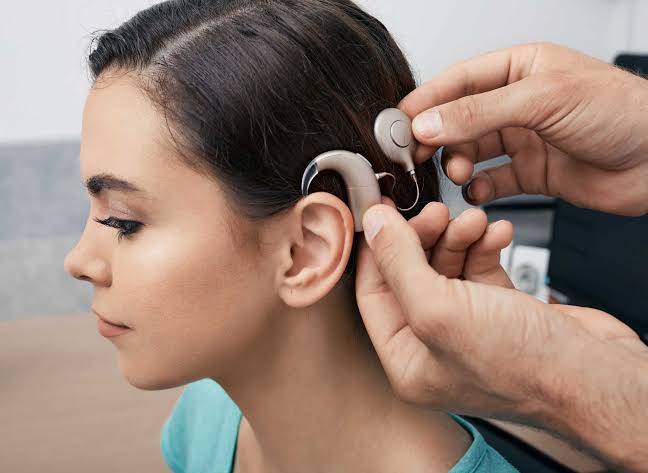
Cochlear implants use a processor that fits behind the ear and picks up sounds from outside. It sends these sounds to a receiver that has been placed under the skin behind the ear.
The receiver then sends the sound signals through a wire. This wire has electrodes that have been placed in the cochlea, which is the snail-shaped part of the inner ear.
These signals make the cochlear nerve work. The nerve sends the signals to the brain and the brain hears them as sounds. These sounds are similar to hearing but not exactly the same.
It takes time and practice to learn to hear the signals from a cochlear implant as words. Most people with cochlear implants make progress in understanding speech within 3 to 6 months of using it. They get better at hearing and understanding over time. A cochlear implant helps people hear and communicate effectively.
People with cochlear implants need to work with a specialist to learn how to hear and understand the sounds it makes. They also need to be patient with themselves as they learn. With time and practice many people, with cochlear implants can. Understand speech much better. A cochlear implant can greatly improve a persons quality of life.
Reasons for doing it
Cochlear implants are really helpful for people who have hearing loss and cannot hear well even with hearing aids. Cochlear implants can help these people talk and listen better which can really improve the quality of their lives. Cochlear implants are a help to people with severe hearing loss.
Sometimes people get a cochlear implant in one ear, which is called unilateral. This means they have a cochlear implant in one ear. Some people have cochlear implants in both ears, which is called bilateral.
Adults usually start with one cochlear implant and one hearing aid. Then as their hearing loss gets worse in the ear with the hearing aid they may get a second cochlear implant. Some people who have hearing in both ears get cochlear implants in both ears at the same time. This can be very helpful for them.
For children who have hearing loss in both ears cochlear implants are often put in both ears at the same time. This is especially true for infants and young children who are just learning to speak. Cochlear implants can help them learn to talk and listen better.
Cochlear implants can help people of all ages from children young as 4 to 12 months old to adults of any age. Cochlear implants are an option for people with severe hearing loss and they can really make a big difference, in their lives.
People with cochlear implants say that these things get better for them:
- They can hear people talking without looking at their lips.
- They can hear noises and know what is making the sound, like a car horn or a fire alarm.
- They can listen to people when it is noisy around them.
- They can tell where a sound is coming from.
- They can watch television. Understand what is being said and they can talk on the phone.
Some people with cochlear implants also say that the ringing or buzzing in their ear, which is called tinnitus gets better in the ear that has the implant.
To get a cochlear implant you have to do these things:
- You have to have hearing loss that makes it hard for you to talk to people.
- Hearing aids have to not be helping you much and a hearing test has to show this.
- You have to be willing to learn how to use the cochlear implant and use it all the time.
- You have to understand what cochlear implants can and cannot do to help you hear and you have to be okay, with that.
Risks
Cochlear surgery is safe.. There are some rare risks. These include:
- Infection of the membranes around the brain and spinal cord. This is called meningitis. You usually get vaccinations to prevent this before surgery.
- Bleeding.
- You might not be able to move the side of your face where you had surgery. This is called paralysis.
- Infection at the place where you had surgery.
- The device can get infected.
- You might have balance problems.
- You might feel dizzy.
- You might have problems with your sense of taste.
- You might get new or worse ringing or buzzing in your ear. This is called tinnitus.
- You might have a brain fluid leak. This is also called a fluid leak or CSF leak.
- You might have long-term pain, numbness or headaches where the implant’s
- The cochlear implant might not help you hear better.
Other things that can happen with a cochlear implant include:
- You might lose whats left of your hearing, in the ear with the implant. This is common.. It doesn’t really affect how well you hear with the cochlear implant.
- The device can fail. Sometimes you might need surgery to replace a cochlear implant that is broken or not working well. A cochlear implant can stop working. In some cases surgery is needed to fix or replace it.
How you prepare
Before cochlear surgery your surgeon will give you details to help you prepare for cochlear implant surgery. Here are some things they may tell you:
- Which medicines or supplements you need to stop taking and, for how you need to stop taking them
- When to stop eating and drinking before the cochlear surgery
What to Expect
Prior to the Procedure
Before you get cochlear implants you will likely have:
- Tests of your hearing, speech and maybe balance
- A physical exam
- MRI or CT scans of your ears. Head to check the cochlea and inner ear
You will work with a doctor who’s an audiologist. They are trained in hearing loss. You will also work with an ear, nose and throat surgeon. They will help you find the best cochlear implant for you.
Cochlear implants have two parts. One part is inside. The other part is outside. Here are your choices:
- A cochlear implant that is inside. It has an unit that goes behind your ear. This unit has a speech processor, microphone, magnet and transmitter. All these parts are in one device. You can charge it when you need to.
- A cochlear implant that is inside. It has a sound processor that fits over your ear. It also has a magnet and transmitter that’s behind your ear. This processor has two parts. They are connected by a cable wire.
Doctors are working on a system. It would be totally implantable. All the parts would be, under your skin. You wouldn’t be able to see them.
Procedure
Cochlear implant surgery is usually done with a kind of medicine that puts you to sleep. This medicine is called anesthesia. When you have anesthesia you do not feel any pain and you are not aware of what is happening during the surgery.
The surgeon will make a cut behind your ear. Then they will make a hole in the bone behind your ear, which is called the mastoid. This is where the internal part of the cochlear implant will be placed.
The surgeon will then make an opening in the cochlear implant part that goes inside your ear, which is called the cochlea. They need to do this so they can put the electrode of the device inside. After that they will sew the skin together so that the internal device is underneath the skin and the cochlear implant is safely in place with the internal device, under the skin and the cochlear implant itself is secure.
Following the procedure
For a time you or your child might feel:
- Discomfort over the ear with the device
- Nausea
Most people can go home on the day as surgery. If you are an adult you will need someone to drive you home. You cannot drive on the day you have anesthesia. You will need to go and see a member of your cochlear implant team in the first few weeks to check on healing.
Turning on the device
one to four weeks after surgery an audiologist will turn on the device. Sometimes it can be as early as the day, after surgery. The audiologist will:
- Adjust the processor to fit you
- Check the parts of the cochlear implant to make sure they are working
- Find out what sounds you or your child can hear
- Tell you how to care for and use the device
- Set the device so that you can hear your best with the cochlear implant
Rehabilitation
This is about teaching your brain to make sense of the sounds you hear with the cochlear implant. When you first get it things like speech and noises, around you will not sound like they used to.
Your brain needs a lot of time to get used to these sounds and to understand what people are saying. This is something that will keep going on. It is an idea to wear the speech processor all the time when you are awake. You will have to take it off when you go swimming or take a shower.
You will need to go to the doctor a lot maybe for your whole life to get the most out of your cochlear implants. When you go back the doctor will check your hearing make sure the device is working right and do some tests.
Results
The results of cochlear surgery are different for each person. The reason you lost your hearing can affect how well the cochlear implants work for you. The length of time you have had hearing loss and whether you learned to talk or read before losing your hearing can also make a difference.
Cochlear implants usually work better for people who could speak and read before they lost their hearing. Children who are born with hearing loss often get the best results when they get a cochlear implant when they are very young. This way they can hear better while they are learning to speak and understand language.
For ups the best results usually happen when there is not a lot of time between losing their hearing and getting cochlear implant surgery. Grown ups who have not heard sound since they were born may not get as much help, from cochlear implants. However for most of these grown ups their hearing does get a little better after they get cochlear implants.
Some things that can happen after getting cochlear implants include:
- Hearing that is clearer. Over time a lot of people find that their hearing gets clearer when they use the device.
- Tinnitus that is not as bad. Now ear noise, which is also called tinnitus is not the main reason to get a cochlear implant.. Sometimes a cochlear implant can make tinnitus better when it is being used. Sometimes having an implant can make tinnitus a little worse.