
Overview
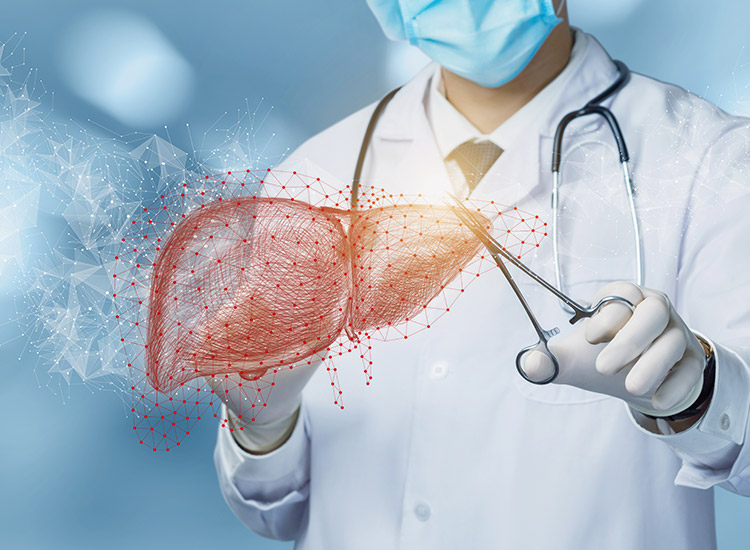
A liver transplant is an operation where the surgeon removes the damaged liver and replaces it with a healthy one. This healthy liver can either be donated by someone who has already passed away or even a portion of the liver from a live donor.
The liver is the largest internal organ. The function of the liver includes:
- Metabolism of nutrients, medications, and hormones
- Bile secretion that assists the absorption of fat, cholesterol, and vitamins
- Formation of proteins necessary for blood clotting
- Detoxification of the blood of toxins and bacteria
- Immune response against infections
Liver transplantation is usually considered as an option for individuals with serious conditions due to end stage chronic liver disease. In some cases, liver transplantation is also done on account of acute hepatic dysfunction.
The majority of liver transplants include liver donated by the deceased person, also known as deceased donor. At present, the number of liver transplants needed is considerably higher than the number of livers donated by the deceased donor.
In case when an individual needs liver transplantation but still has to wait for a liver of the deceased donor, then living-donor liver transplantation may be an alternative treatment option for that individual. Living-donor liver transplantation is possible because of the regenerative nature of the liver tissue.
Reasons for doing it
A liver transplant can serve as a means of therapy for liver failure. In addition, liver transplants may also be done on patients suffering from liver cancer whose other methods of treatment have ceased to be effective.
Acute liver failure can occur quickly or gradually. In cases where liver failure occurs quickly, in a few weeks, it is referred to as acute liver failure. However, acute liver failure is a rare situation since it mostly happens due to complications of certain medications and infection.
In spite of being able to cure acute liver failure through a liver transplant, liver transplantation is most times used as a way of treating chronic liver failure which is a slow process taking months or even years.
The main causes of chronic liver failure include several factors. One of the major causes of chronic liver failure is liver scarring, also referred to as cirrhosis. Cirrhosis occurs when normal liver cells are replaced with scars thereby hindering the normal functioning of the liver.
The factors responsible for developing cirrhosis that results in liver failure and liver transplantation are the following:
- Hepatitis B or hepatitis C.
- Alcohol use disorder, which leads to the damage of the liver because of excessive drinking.
- Metabolically Associated Steatohepatitis (MASH), previously referred to as nonalcoholic fatty liver disease. It is a condition when there is an accumulation of fat in the liver, resulting in inflammation or injury to liver cells.
- Genetic disorders, such as liver disorders. They include hemochromatosis, a genetic disorder in which there is excessive iron accumulation in the liver, and Wilson’s disease that causes excessive accumulation of copper in the liver.
- Bile duct disorders that involve bile ducts, which are the tubes carrying bile away from the liver. Such disorders include primary biliary cholangitis, primary sclerosing cholangitis, and biliary atresia. Biliary atresia is the most frequent cause of liver transplantation in children.
Liver transplant can be used to treat liver cancer.
Risks
Complications associated with the procedure
Liver transplantation is an operation that can cause complications. Complications may be directly related to the operation itself, or may result from medications required to prevent the rejection of the new organ.
Risks associated with the procedure include:
- Biliary tract complications, such as biliary leak or narrowing of the biliary tracts.
- Bleeding.
- Clotting of the blood.
- Failure of the new organ.
- Infection.
- Rejection of the new liver.
- Seizures and mental confusion.
Eventually, there is also a possibility of recurrence of the primary disease of the liver.
Side effects of antirejection drugs
In case of receiving a liver transplant, you will be prescribed certain drugs which need to be taken throughout your lifetime to avoid organ rejection. These antirejection drugs may have such side effects as:
- Thinning of bones
- Diabetes
- Diarrhea
- Headache
- Hypertension
- High levels of cholesterol
Since the antirejection drugs suppress your immune system, you will be at an increased risk of having an infection. In order to help you cope with an infection, you may be prescribed certain drugs.
How you prepare
Selecting a transplant center
If your healthcare provider suggests liver transplantation for you, then chances are, you might get a referral to a transplant center. You are free to pick up any transplant program you want, even outside the referral list and can pick a transplant program from your health insurance company’s list of preferred transplant centers.
While choosing a transplant program, you should keep in mind the following things:
- Find out how many transplants and what kinds does the center perform each year?
- Know the liver transplant success rates of that center
- Use statistics for the comparison of transplant programs, from the database of the Scientific Registry of Transplant Recipients
- Know the cost involved prior to your transplant, during your transplant and post your transplant in terms of testing, organ recovery, surgical and hospital expenses as well as transport charges to and from the center for the transplant and follow-ups
- Other ancillary services offered by the transplant program like support groups, transportation arrangements, accommodation at a local place during recovery period and referrals
- The willingness of the center to keep itself updated with new technologies and transplant practices, which means the program is developing
After selecting the transplant center, you should get an evaluation done to find out whether you are eligible to undergo the transplantation procedure at the selected transplant center. All transplant centers have certain criteria for their patients to be eligible for transplantation.
Through this evaluation process, it will be decided whether or not you are:
- Fit enough for surgery and for taking medications on a regular basis in the post-transplant period throughout your life
- Suffering from some medical problems that could affect the success of the transplantation
- Willing and able to take medications properly and follow the advice of the transplantation team
Some of the examinations that you can undergo during your evaluation include the following:
- Laboratory tests, involving blood and urine tests to assess how well your liver and other internal organs are functioning.
- Tests involving imaging of the liver, such as ultrasonography.
- Tests of the heart to examine the condition of the cardiovascular system.
- General physical examination with cancer screenings to evaluate your overall health and any underlying diseases that can influence your transplantation.
Other components of your evaluation may include:
- Nutritional counseling with a dietitian to evaluate your nutritional status and provide suggestions about planning proper diets pre and post-transplantation.
- Psychological evaluation to screen for any psychological disorders including depression and anxiety, as well as to ensure that you comprehend all the risks of undergoing liver transplantation.
- Evaluation by a social worker to identify whether you have enough people around to assist you with care post-transplantation.
- Counseling on addiction issues if you have difficulty with quitting drinking alcohol, smoking or taking drugs.
- Financial counseling to help you understand all financial aspects of transplantation and follow-up treatment, including what is covered by your insurance.
Liver transplantation in the early days was conducted only in patients of youth and midlife age groups. Now, the patients in their 60s and above can also be candidates for this surgery depending on their medical condition.
Once all the required investigations and consultations have been completed, the selection committee in the transplant center discusses your medical case. They decide whether the surgery is suitable for you and if you are fit for undergoing a liver transplant procedure.
In case both of the answers are positive, you are placed on the waiting list for the surgery.
What to Expect
Prior to the Procedure
Waiting list placement
The healthcare professionals will consider your liver function test results, among other factors, to establish the seriousness of your illness, your urgency to undergo the liver transplant procedure, and your position on the waiting list.
Your ranking on the list depends on the points you score. The healthcare professionals calculate the point you score using the Model for End-Stage Liver Disease (MELD) and the Pediatric End-Stage Liver Disease (PELD) score.
The MELD score for adults is calculated based on a formula that uses your test results. Your score ranges from 6 to 40 and is used to estimate the probability of dying without getting a liver transplant within 90 days. The higher your score, the more urgent your need for a liver transplant.
In the event of liver transplants from the deceased donors, the organs are matched using the blood type of people on the waiting list. The organs are then allocated to people on the list based on the scores. The organs are first given to people with high MELD scores. In case two people have similar MELD scores and blood types, the one who has been on the list for a longer period is prioritized.
There are some liver diseases such as liver cancer whose patients do not earn high MELD scores. For such patients, the transplant centers may apply for additional MELD points in case they meet the medical criteria.
In addition, people with acute liver failure cannot get their MELD scores calculated using the regular process. They are allocated on the transplant list based on the severity of the illness.
Anticipating the New Liver
People who are waiting for a donated liver are likely to deal with varying amounts of time from the date of application to when they are approved to receive a donated liver. For some people, it can take just a few days; others may wait months for a deceased organ donor liver or possibly a live organ donor liver.
While patients are waiting for their new liver, the medical team is continuing to take care of the patient’s medical needs related to his/her current illness. The patient will experience many health-related problems due to the end-stage liver disease and may spend several times in a hospital setting. As patients’ disease progresses, their MELD score will be recalibrated after updates regarding their medical condition are received.
Living liver donors
Few liver transplants are performed each year using the livers of living donors. In a procedure called a living-donor liver transplant, a surgeon removes a small part of a healthy person’s liver to use as a transplant organ. The first living-donor liver transplants were performed in children who needed liver transplants; at that time, it was challenging for them to get an organ from a deceased donor. Now that the option of deceased-donor liver transplantation is available for children, living-donor liver transplant are also an option for adults with severe liver disease.
A living-donor transplant is an option to consider if you’re waiting for a liver transplant. Your doctor may recommend that you have a living donor transplant because it can help reduce some of the risks associated with waiting for a transplant. The first step in considering a living-donor transplant for yourself or a loved one is finding someone willing to serve as your donor. Your age, blood type, and organ size are important factors in determining whether you’d be a good match for a living-donor liver transplant.
Most living-donor liver transplants occur between family members or between close friends who are often related. If you have any relatives or friends who might be interested in being your donor, ask them carefully, and consider discussing this with your transplant center.
Living-donor liver transplants and deceased-donor liver transplants can both be a good option for people who need a liver transplant. Finding a living donor who is willing to donate part of his or her liver can be challenging for many reasons: potential donors must go through many medical tests to see if they’re good organ matches and are physically and emotionally prepared to undergo such a significant surgery.
The liver is the only internal organ that can regenerate itself, growing back to its original size within 6 months after surgery. Most living liver donors recover from surgery, and their livers regenerate quickly.
Your transplant team can help you and your potential living donor talk through the risks and benefits and make the best decision for your situation.
Domino liver transplant
Another less common but also effective procedure for a living-donor liver transplant is known as a domino liver transplant. This procedure involves receiving a liver from another person with a rare genetic disease that is benign or does not affect the function of the liver. Such diseases include familial amyloidosis and maple syrup urine disease (MSUD).
In this case, the donor, who is also a recipient, first receives a transplant to remove the faulty liver. In the case of familial amyloidosis, a person who has received a transplant from such a donor may experience the manifestations of the disease, but usually, they are mild and appear much later. In the case of MSUD, a transplant from such a donor does not provoke the appearance of the disease, since the amino acids contained in food are broken down normally in the body.
Living-donor liver transplant is usually indicated in people of middle and advanced age because the manifestations of the disease that were transferred from the donor are less common in such people. However, transplants from living donors may also be appropriate in children. In the post-transplant period, doctors closely monitor the health indicators of the recipient in case of any complications related to the donor’s disease. Nevertheless, doctors always choose the best treatment for each patient, considering individual factors. In addition, healthcare providers assess you to determine whether you are a candidate for a particular type of transplant or another medical intervention.
Staying healthy
Whether you are waiting for a liver transplant or have already had a transplant, it is important to stay as healthy as possible. Staying active and eating well can help you be as healthy and strong as possible for your transplant and help you heal quickly after surgery. It is important that you:
- Take care of yourself by doing what your doctor has recommended
- Tell your doctor about any changes in your health
- Attend all of your medical appointments
- Stay active, including social activities and exercise
- Make sure the transplant team can reach you if needed
If you are waiting for a liver donation, it is important that you keep your hospital bag packed and arranged to leave at a moment’s notice. You should also make plans for getting to the transplant center right away.
You may want to ask the transplant team for help with arranging transportation.
Procedure
Deceased-donor liver transplant
If a liver from a donor becomes available for you you will be asked to come to the hospital right away. The doctors and nurses who take care of you will admit you to the hospital. Do a checkup to make sure you are healthy enough for the liver transplant surgery.
The liver transplant surgery is done when you are asleep so you will not feel anything during the procedure.
The doctor who does the surgery makes a big cut in your belly to get to your liver. Where the cut is and how big it is depends on how the doctor likes to do the surgery and what your body’s like.
The doctor takes out your liver and puts the new liver from the deceased donor in your body. Then the doctor connects the blood vessels and the bile ducts to the liver. The surgery can take a long time up to 12 hours it depends on what you need.
When the new liver is in place the doctor sews up the cut with stitches and staples. Then you are taken to a special care unit where the doctors and nurses can watch you closely as you get better, from the deceased-donor liver transplant.
Living-donor liver transplant
When you get a liver transplant from a living donor you know the surgery date ahead of time.
First the doctors operate on the living donor. They take out a part of the living donors liver. Then the doctors take out your liver and put the new liver part from the living donor into your body. After that the doctors connect the blood vessels and bile ducts to the liver from the living donor.
The new liver part in your body and the liver part that is left in the living donors body grow back fast. They get back, to their size in just a few months. The liver transplant is a surgery but the living-donor liver transplant helps the liver grow back quickly.
Following the procedure
After a liver transplant
After your liver transplant here is what you can expect:
- You might stay in the care unit for a few days. Medical staff keep an eye on you to check for any problems. They also regularly test your liver to make sure it is working properly
- You will spend around 5 to 10 days in the hospital. Once you are stable you will move to a recovery area until you are ready to go
- As you recover at home you will have checkups. Your transplant team will create a schedule for you. At first you may have blood tests a few times a week and less often over time.
- You will need to take medicines for the rest of your life. After a liver transplant you take medicines. Many of these, like immunosuppressants help stop your system from attacking your new liver. Other medicines help reduce the risk of complications after your transplant.
Liver transplant surgery is a deal and it takes a long time to feel better. You will probably need six months or more to feel fully healed after the liver transplant. Some people can go back, to work. Do the things they normally do a few months after the surgery. The time it takes to get better after the liver transplant surgery really depends on how sick you were before you got the liver transplant.
Results
Liver transplantation success rates
Your chances of having a liver transplant and living a long time after that depend on what is going on with you.
In general 75 percent of people who get a liver transplant can live for at least five years after they have the surgery. So for every 100 people who get a liver transplant 75 people can live for five years and 25 people do not make it that long. 60 Percent of people who have liver transplants can live for 10 years or more.
People who get a liver from someone who’s still alive often do better at first than people who get a liver from someone who has passed away. However it is hard to compare what happens to them in the run because people who have a living donor usually do not have to wait as long for a liver transplant and they are not as sick as people who get a liver from someone who has passed away.
Liver transplant survival rates are important, for people who need a liver transplant to think about. Liver transplant survival rates can give people an idea of what to expect. People who are thinking about liver transplant survival rates should talk to their doctor about liver transplant survival rates.
Diet and nutrition
After you have a liver transplant it is really important to eat a balanced diet to help your body recover and keep your liver healthy.
The people who take care of you after your transplant, your transplant team include a specialist who helps you with food and nutrition. This person is called a dietitian. They can talk to you about what you should eat and answer any questions you have after your transplant.
What you eat after your liver transplant should not have much salt, cholesterol, fat or sugar.
You should not drink alcohol because it can hurt your liver. Do not have any drinks with alcohol in them. Do not use alcohol when you cook.
Your dietitian can give you lots of ideas for foods to eat. They may tell you to do things like:
- Eat least five servings of fruits and vegetables every day.
- Do not eat grapefruit. Drink grapefruit juice because they can affect some of the medicines you take.
- Eat foods that have a lot of fiber.
- Choose foods that are made from grains instead of foods that are processed.
- Drink dairy products that are low in fat or have no fat, which is good, for your bones.
Your dietitian may also tell you to:
- Eat meat, poultry and fish that’re lean.
- Be careful when you handle food so you do not get sick.
- Drink a lot of water and other fluids every day so you stay hydrated.
Exercise
After you have a liver transplant you should make exercise and physical activity a part of your life. Exercise can really help you feel better physically and mentally.
When you are feeling a little better after the surgery you should try to walk much as possible. As you start to feel stronger you can do things to get your body moving every day.
You can do things like walking riding a bike, swimming and some light weight lifting. You can also do physical activities that you like. The key is to find things that you enjoy. That make you feel good. Exercise like walking, bicycling and swimming can all be a part of your life after a liver transplant.. You have to remember to talk to your transplant team before you start or change your exercise routine after the transplant. They can give you advice on what exercise’s good, for you and what you should avoid.